
Top Tourist Attractions in Rajasthan
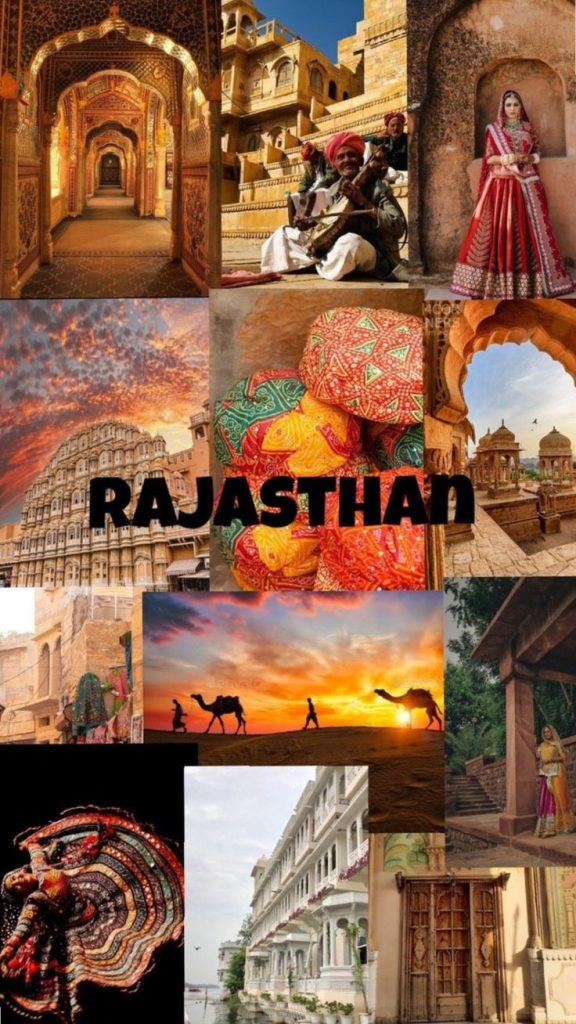
Top Tourist Attractions in Rajasthan: A Journey Through the Land of Kings
Rajasthan. Even the name feels like something out of an adventure story. It’s the kind of place that makes you stop mid-sentence when you’re trying to describe it, because no single word quite does it justice. Grand? Colorful? Ancient? All of those, yes — but also oddly alive in a way that surprises first-time visitors. This isn’t a place frozen in time for tourists to gawk at. People live here, festivals roar through the streets, camels still plod across golden dunes at dusk, and chai is poured into tiny clay cups on every corner.
If you’re planning a trip to Rajasthan — or even just daydreaming about one — here’s a look at the best the state has to offer, broken down by what interests you most.
For the Fort Lovers: Rajasthan’s Mighty Fortresses
Let’s start with the obvious, because Rajasthan’s forts are simply on another level.
Mehrangarh Fort in Jodhpur is probably the most jaw-dropping of the lot. It rises 400 feet above the city on a rocky cliff, and when you see it for the first time, you genuinely wonder how humans built this centuries ago without modern machinery. Here, the fort feels more like a palace — a blend of Hindu and Mughal architecture that unfolds in courtyards and galleries. Many visitors ride elephants up the hill path, though jeeps are also available. The Sheesh Mahal (Hall of Mirrors) inside is genuinely stunning — thousands of tiny mirrors catch light and scatter it across the walls like something out of a dream.
For the Palace Enthusiasts: Royal Residences That Take Your Breath Away
Rajasthan’s royalty didn’t just build forts — they built palaces so elaborate they almost feel excessive, until you stand inside them and realize they’re just… magnificent.
City Palace in Udaipur sits right on the banks of Lake Pichola and is one of the most romantic royal complexes in the country. It’s actually a series of palaces built over several centuries, and parts of it are still used by the royal family today. The views of the lake from the palace terraces are postcard-perfect. If you can swing it, having dinner at one of the rooftop restaurants nearby while looking at the Jag Niwas (Lake Palace) floating in the middle of the lake is a memory that sticks.
Umaid Bhawan Palace in Jodhpur is a different experience — grand, colonial in style, and still partly a royal residence while also functioning as a luxury hotel. Even if you’re not staying there, the museum wing is open to visitors and gives you a real sense of the opulence Rajasthan’s kings lived in.
Junagarh Fort in Bikaner often gets skipped in favor of the more famous forts, but that’s a mistake. The interiors are some of the most ornate in all of Rajasthan — the Anup Mahal with its gold leaf work and the Karan Mahal are genuinely spectacular. Bikaner itself is a quieter, less touristy city, which makes the whole visit feel more relaxed and authentic.
For the Nature See F kers: Wild Rajasthan Beyond the Desert
Most people associate Rajasthan with sand dunes and heat, and while the Thar Desert is certainly a highlight, the state has more natural variety than many expect.
Ranthambore National Park is one of the best places in India — arguably the world — to spot Bengal tigers in the wild. The tigers here are notably unbothered by jeeps, which means sightings are more frequent than in most other reserves. The park also has leopards, sloth bears, and enormous mugger crocodiles sunning themselves by the ancient stepwells. Thousands of migratory birds arrive here every winter, and the park hosts over 370 species. Walking or cycling through the wetlands on a quiet morning, with birds calling from every direction, is a completely different side of Rajasthan that most visitors don’t even know exists.
The Sam Sand Dunes near Jaisalmer are where most people get their quintessential Rajasthan desert experience — camel rides, folk music under the stars, and sleeping in tented camps. It can get a bit touristy in peak season, but if you go slightly off-season or choose a camp that’s further from the main cluster, the experience of lying under a sky full of stars in absolute silence is hard to beat.
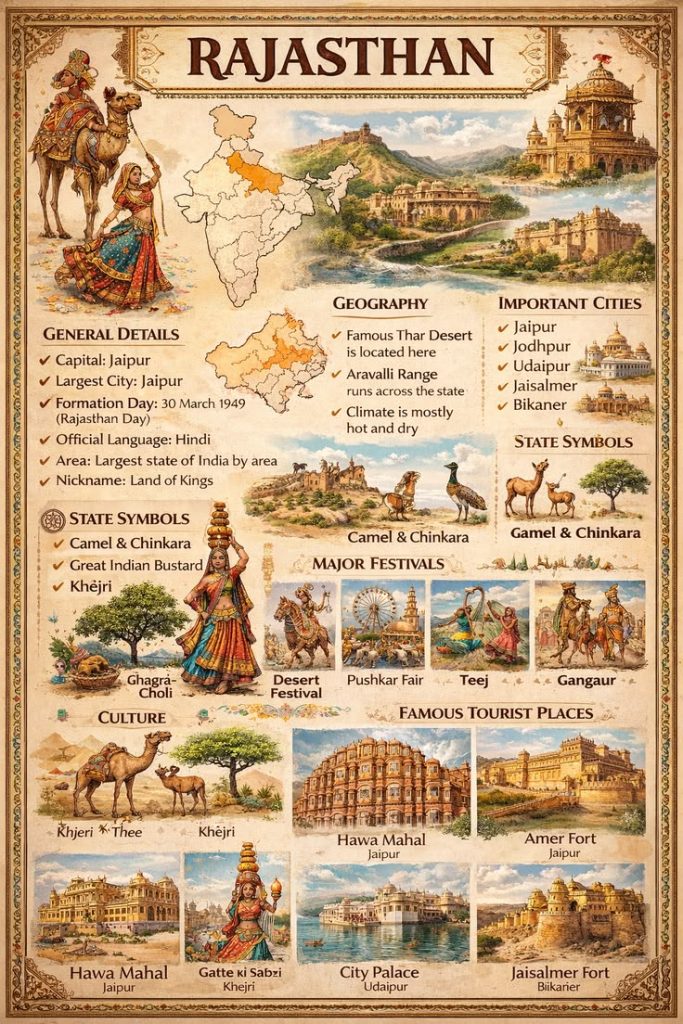
For the Culture Vultures: Cities That Pulse With Life
Rajasthan isn’t just monuments and landscapes — it’s people, music, food, crafts, and festivals that are very much alive.
Jaipur, the Pink City, is the obvious starting point. The bazaars here are legendary — Johari Bazaar for jewelry, Bapu Bazaar for textiles, Nehru Bazaar for jootis (traditional leather footwear). The city comes alive in January during the Jaipur Literature Festival, one of the world’s largest free literary events, and during Diwali when the whole city seems to shimmer with light.
Pushkar is a small town but it carries enormous spiritual weight. It’s one of the few places in India with a temple dedicated to Brahma, and the ghats around the Pushkar Lake have a peaceful, almost otherworldly quality. Every year in November, Pushkar hosts its famous Camel Fair — thousands of camels, traders, musicians, and tourists descend on the town for a week of color, commerce, and celebration. It’s chaotic and wonderful in equal measure.
Shekhawati region — a cluster of towns including Mandawa, Nawalgarh, and Fatehpur — is often called an open-air art gallery. The havelis (merchant mansions) here are covered in elaborate frescoes, painted by wealthy traders centuries ago. The scenes range from mythological stories to surprisingly early depictions of cars, trains, and European figures, which the artists clearly found as exotic as Westerners found India. It’s one of Rajasthan’s most underrated corners.
For the Spiritual Travellers: Sacred Spaces and Quiet Temples
Rajasthan has a deep, layered spiritual life that reveals itself if you slow down enough to notice it.
Dilwara Temples in Mount Abu are perhaps the finest example of marble craftsmanship in India. These Jain temples, built between the 11th and 13th centuries, have ceilings, pillars, and domes carved with such delicate intricacy that it genuinely looks impossible. Scholars have written that the craftsmen were paid based on the weight of marble dust they carved away — so the finer the carving, the higher the pay. Whether or not that’s true, the result is extraordinary.
Karni Mata Temple in Deshnok, near Bikaner, is one of those places that either fascinates or unnerves visitors — often both. Thousands of rats live freely inside the temple and are considered sacred, believed to be the reincarnated souls of devotees. It’s bizarre and oddly moving at the same time.
Ranakpur Jain Temple in the Aravalli Hills is another architectural marvel — 1,444 intricately carved marble pillars, none of which are identical. The forest setting adds to the sense of sacred stillness.
Practical Notes for the Traveller
The best time to visit Rajasthan is between October and March, when the weather is cool and manageable. Summers are brutal — temperatures can climb past 45°C in the desert regions. The state is well-connected by train, and the Palace on Wheels luxury train is a wonderful way to cover multiple cities in style.
Rajasthani food deserves a special mention — dal baati churma, laal maas, ker sangri, and ghevar are things you should eat here and not just anywhere. Street food in Jaipur, particularly at Laxmi Misthan Bhandar (LMB), has been satisfying visitors for generations.
Rajasthan rewards slow travel. It’s tempting to rush through the major cities, but the real magic often appears in the smaller moments — a conversation with a potter in a village outside Jodhpur, watching the sun set behind the dunes in complete silence, or finding a tiny stepwell (baoli) tucked behind a temple in some forgotten town.
The Land of Kings has earned its name many times over. But what makes it truly special isn’t the royalty — it’s the relentless, vibrant, dust-covered life that carries on beneath all that grandeur.