
7-Day Himachal Pradesh Itinerary
7-Day Himachal Pradesh Itinerary
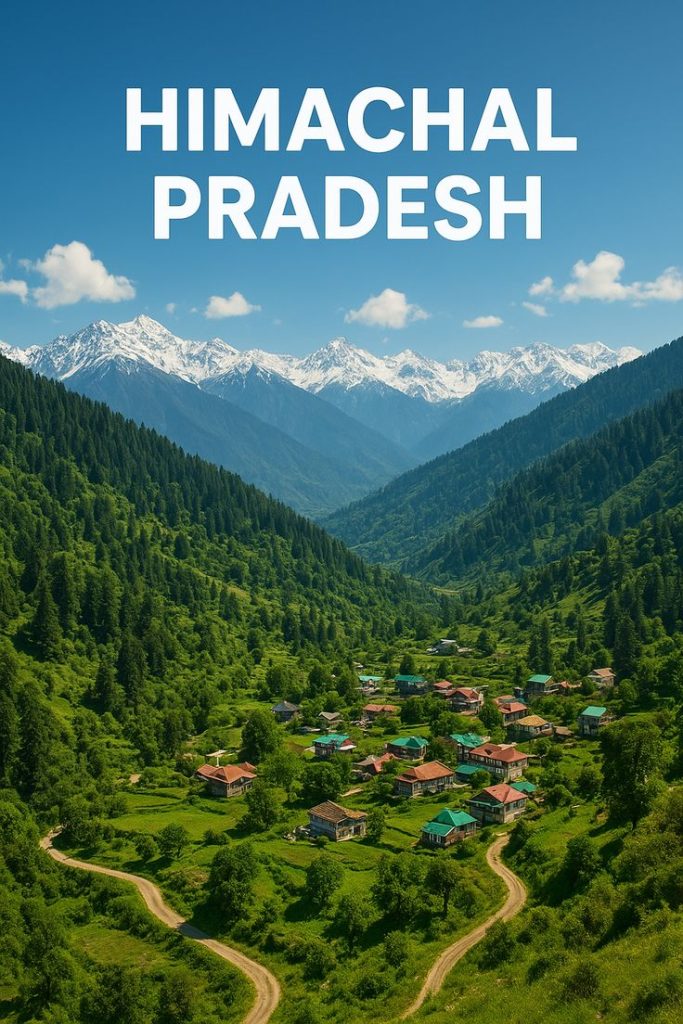
Himachal Pradesh is one of those places that gets under your skin before you even realize it’s happening. One morning you’re stuck in Shimla traffic eating momos from a roadside stall, and by the end of the week you’re sitting in silence at 14,000 feet watching the last light fall on the Spiti Valley, wondering how you’re going to go back to your regular life. This 7-day itinerary is designed to give you that full arc — the colonial hill stations, the deep mountain valleys, the ancient monasteries, and the roads that feel like they shouldn’t exist but do.
Day 1 — Shimla: Arrival and the Art of Slowing Down
Land in Shimla or take the overnight train from Delhi (the Kalka-Shimla toy train is a UNESCO heritage experience worth booking in advance), and give yourself permission to do very little on Day 1. Shimla rewards wandering. The Mall Road is touristy but genuinely lovely in the early morning before the crowds arrive, and the Scandal Point area near the clock tower is a good place to drink chai and get your bearings.
In the afternoon, walk up to Jakhu Temple, a 2.5 km trek from the ridge that takes you through forest thick with playful — and occasionally aggressive — rhesus monkeys. Keep your sunglasses and snacks close. The temple sits at 8,000 feet and the views across the pine-covered hills are your first real indication of the landscape that’s waiting for you. End the evening at one of the restaurants on The Mall. Order Himachali Dham if you can find it — a traditional meal of dal, rice, and rajma that’s been feeding locals at celebrations for centuries.
Day 2 — Shimla to Manali: The Drive That Sets the Tone
This is a long drive — roughly 270 km and anywhere from 8 to 10 hours depending on the route and road conditions. It sounds exhausting, but it’s actually one of the most beautiful days of the trip if you leave early and treat it as the experience rather than the travel. The road follows the Beas River for much of its length, winding through Mandi town (worth a quick stop to see the old stone temples near the bus stand) and climbing steadily through apple orchards and cedar forests as you approach the Kullu Valley.
Arrive in Manali by evening. Check in, eat something warm, and sleep. You’ll need it.
Day 3 — Manali: Old Town, Temples, and the Hadimba Forest
Manali is split between the chaos of the main market area and the extraordinary calm of Old Manali, a 20-minute walk or short auto ride away. Spend the morning in Old Manali — the lanes are narrow and lined with guesthouses, cafes, and tiny shops selling dried apricots and hand-knit wool. It has the feeling of a place slightly outside of time.
From there, walk to Hadimba Devi Temple, a 16th-century wooden pagoda-style shrine set inside a forest of ancient deodar trees. It’s one of those places where the architecture and the natural setting feel completely inseparable. The roof is layered with carved wooden panels and antlers, and the interior is small and dim and fragrant with incense. Even if you’re not religious, it’s hard not to feel something here.
In the afternoon, head to the Solang Valley for a few hours. In summer, paragliders dot the sky and the meadows are wildly green. In winter, it becomes a skiing destination. Either way, it’s the kind of open mountain space that makes city life feel very far away.
Day 4 — Rohtang Pass (or Sissu): Your First Real High Altitude Day
Rohtang Pass sits at 13,050 feet and is technically in the Greater Himalayas — crossing it is the moment the landscape shifts completely. The green valleys below give way to a stark, wind-scoured moonscape, with snow lingering on the peaks even in July. A permit is required to visit Rohtang (apply online through the Himachal tourism portal a day in advance), and vehicles are restricted on certain days, so plan accordingly.
If permits are unavailable or the road is closed due to weather, Sissu in the Lahaul Valley is a worthy alternative. It’s accessible via the Atal Tunnel — a 9 km road tunnel that opened in 2020 and changed the entire logistics of Lahaul travel. Sissu itself is a small village with a waterfall that drops directly into the Chandra River. Have lunch in Keylong, the district headquarters of Lahaul, before returning to Manali for the night.
Day 5 — Manali to Kasol via Kullu: The River and the Parvati Valley
On Day 5, you head into a different kind of Himachal experience. The Parvati Valley, which runs east from the town of Bhuntar, is wilder and quieter than the Manali corridor. The road follows the Parvati River upstream through villages where apple farming, mountain trekking, and a certain counter-cultural traveller energy coexist without much friction.
Kasol is your base — a small village that has become something of a hub for backpackers and trekkers. The vibe is casual and the cafe food is surprisingly international, but the real draw is the landscape. Take a late afternoon walk along the river path toward Chalal, a tiny settlement 20 minutes from Kasol that can only be reached by a footbridge. Sit by the river as the light goes amber. This is Himachal at its most unhurried.
Day 6 — Kheerganga Trek: Earning the Hot Springs
This is the physical highlight of the itinerary for most people. Kheerganga is a trek of roughly 12 km round trip, starting from the village of Barshaini (a 45-minute drive from Kasol). The trail climbs steadily through dense forest, passing waterfalls and small stream crossings, gaining around 3,000 feet in elevation before opening onto a high-altitude meadow with a natural hot spring.
The spring itself sits at around 9,750 feet and the water temperature is a genuine, welcome shock after the cold and the exertion of the climb. There’s a small temple nearby dedicated to Lord Shiva, and the meadow is often dotted with tents for those who choose to camp overnight. Start before 8 AM to give yourself time and avoid the afternoon crowds on the trail. Wear layers — the top is significantly colder than the valley floor, regardless of what the weather looks like when you leave.
Return to Kasol by evening, eat a large dinner, and sleep deeply.
Day 7 — Manikaran and the Drive Back: Sacred Water and Goodbye Moments
Save your last morning for Manikaran, a pilgrimage town about 4 km from Kasol that sits at the confluence of the Parvati River and the Manikaran Khad. It’s sacred to both Hindus and Sikhs — the Sikh Gurudwara here is one of the most significant in the region, and the langar (free community kitchen) serves food cooked using the geothermal hot springs that bubble up beneath the town. The water in Manikaran is hot enough to boil rice, and the Gurudwara actually uses the springs to cook the langar rice for thousands of pilgrims daily. Eat there if you can — it’s free, it’s good, and there’s something quietly moving about sitting in a large hall with strangers sharing a meal.
From Manikaran, begin the drive back toward Chandigarh or Shimla depending on your onward journey. The drive takes 6 to 7 hours and rolls back through the Kullu Valley and down through the hills. It’s a long one, but by now you’ve seen enough to know that every hour of driving in Himachal comes with a view worth having.
Practical Notes Worth Knowing
The best time to do this itinerary is between May and October, with June-September being ideal for the Parvati Valley and trekking routes, though Rohtang may see monsoon closures in July and August. Pack for temperature swings — mornings at altitude can be cold even in summer. Altitude sickness can affect people above 10,000 feet; ascend gradually and stay hydrated. Road conditions vary enormously; always check local reports before heading over mountain passes. A private cab booked for the full week will cost more but gives you flexibility that shared transport cannot.
Himachal Pradesh is not a destination that reveals itself in a hurry. Seven days is enough to understand why people come back year after year, and not nearly enough to feel like you’ve seen everything. That, honestly, is the point.