
Top 10 Places to Visit in Goa
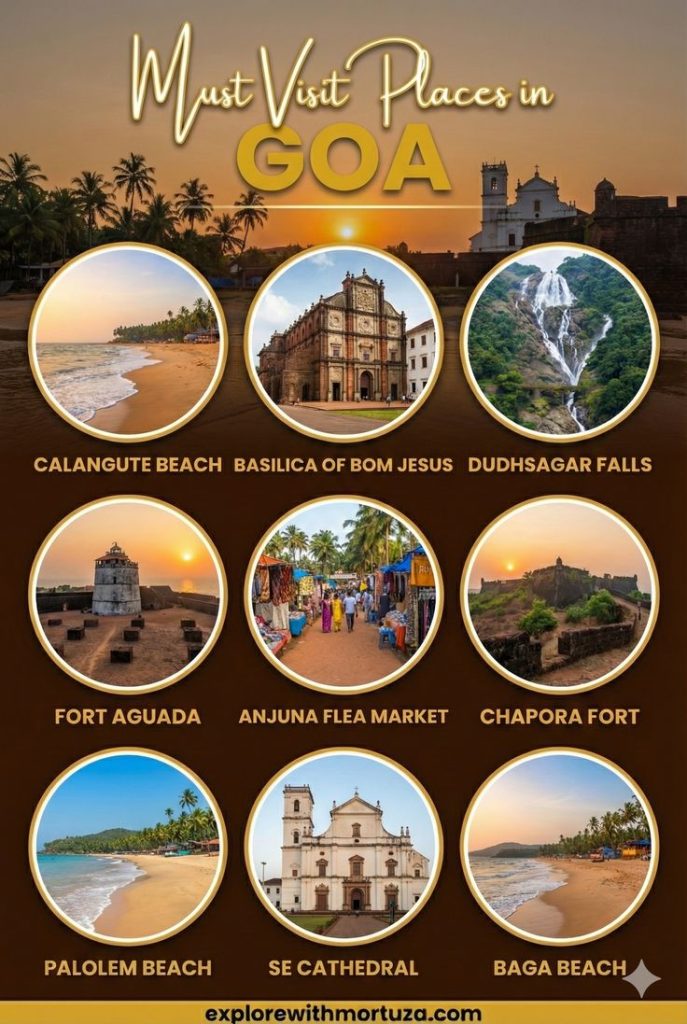
Top 10 Places to Visit in Goa: A Real Traveler’s Guide Goa is one of those places that gets under your skin. You visit once, and somehow, you find yourself planning the next trip before you’ve even unpacked. I’ve heard that from friends, read it in journals, and honestly — after spending time there myself — I completely get it. There’s something about this tiny coastal state on India’s western shore that feels unlike anywhere else in the country. Maybe it’s the salt in the air, the unhurried pace of life, or the way the evenings stretch out lazily over the Arabian Sea. 1. Calangute Beach Calangute is often called the “Queen of Beaches” in Goa, and while it can get crowded during peak season, it earns its reputation. The stretch of golden sand is wide and long, the water is warm, and the energy here is pure vacation mode — jet skis, parasailing, beach vendors selling everything from coconut water to shell jewelry, and restaurants that spill right onto the sand. It’s not the place to go if you’re looking for solitude. But if you want to be in the middle of the action, meet other travelers, and soak in that classic Goan beach atmosphere, Calangute delivers. Go early in the morning if you want the quiet version of it — just you, the waves, and the fishermen pulling in their nets. 2. Basilica of Bom Jesus, Old Goa This one catches people off guard. You go in expecting a pretty old church, and you walk out having experienced something genuinely moving. The Basilica of Bom Jesus is a UNESCO World Heritage Site and one of the finest examples of Baroque architecture in Asia. Built in the late 1500s, it houses the mortal remains of St. Francis Xavier — a figure deeply revered across Goa and beyond. The interior is ornate but not overwhelming. The gilded altar, the hushed atmosphere, and the sense of history layered into every stone — it’s the kind of place where even non-religious visitors tend to go quiet. Old Goa as a whole is worth half a day of exploration. The Se Cathedral nearby is the largest church in Asia, and the ruins around the area have their own quiet drama. 3. Palolem Beach, South Goa If Calangute is the loud, popular elder sibling, Palolem is the cooler, more relaxed younger one. Located in the far south of Goa, this crescent-shaped beach has long been a favorite among backpackers and solo travelers looking for something a little more chilled out. The bay is naturally sheltered, which means the water is calmer — great for swimming. Rows of wooden beach huts line the sand, small enough to feel personal, with hammocks strung between coconut palms. The seafood here is outstanding. Order the prawn curry, sit with your feet in the sand, and watch the sun drop into the sea. It’s the kind of evening you don’t easily forget. 4. Dudhsagar Waterfalls Most people don’t realize that Goa has waterfalls — let alone ones this spectacular. Dudhsagar, which literally means “sea of milk,” is a four-tiered cascade that drops around 310 meters through dense forest in the Western Ghats. It’s one of the tallest waterfalls in India, and the sight of all that white water tumbling down against a wall of green is genuinely breathtaking. Getting there is part of the adventure. You’ll typically take a jeep through the Bhagwan Mahavir Wildlife Sanctuary, crossing a few river streams along the way. The best time to visit is during or just after the monsoon, when the falls are in full flow. It’s worth waking up early for. 5. Anjuna Beach and Its Famous Flea Market Anjuna has a reputation — and it’s earned it. This was the original Goa, the place where travelers first landed in the 1960s and 70s and decided they weren’t in any hurry to leave. There’s still something of that spirit here, in the low-key beach bars, the painted walls, and the Wednesday flea market that’s become a cultural landmark in its own right. The Anjuna Flea Market is a chaotic, colorful, wonderful mess of stalls selling clothes, silver jewelry, spices, handicrafts, and things you didn’t know you needed until you saw them. It draws locals, tourists, and long-term Goa residents alike. Even if you don’t buy anything, walking through it is a genuinely fun way to spend a morning. 6. Chapora Fort For the views alone, Chapora Fort is worth the short hike. Perched on a headland above the village of Vagator, this 17th-century Portuguese fort offers a panoramic sweep of the coastline — the Chapora river on one side, the Arabian Sea on the other, and the rolling green hills of North Goa stretching into the distance. The fort itself is mostly ruins now, which somehow makes it more photogenic. Come at sunset. Bring water. Find a quiet ledge to sit on and just take it all in. Locals have been known to come up here just to watch the light change over the water. You’ll understand why once you’re there. 7. Fontainhas, Panaji’s Latin Quarter Panaji is Goa’s state capital, and most visitors pass through without looking closely. That’s a mistake, because Fontainhas — the old Latin Quarter tucked into a corner of the city — is one of the most visually distinctive neighborhoods anywhere in India. Narrow lanes are lined with 18th and 19th century Portuguese houses painted in terracotta red, ochre yellow, and pale blue. Window frames are painted white, and bougainvillea spills over the walls. Tiled plaques mark corners and doorways. It feels like a small slice of Lisbon transported to the tropics and left to slowly, beautifully age. Walk through it on a quiet afternoon, stop for a local Goan coffee at one of the old bakeries, and take your time. 8. Spice Plantations of Ponda About 30 kilometers inland from Panaji, in the Ponda region, lies a world completely different from the beaches. The spice plantations here are working farms — and visiting one is a genuinely enriching experience, not just a tourist checkbox. Guides walk you through rows of cardamom, cinnamon, black pepper, vanilla, and nutmeg, explaining the cultivation process in ways that make you look at your spice rack differently back home. Most plantations offer a traditional Goan lunch afterward, served on banana leaves with rice, curry, and fish. The meal alone is worth the trip. 9. Vagator Beach and Ozran Beach Just south of Chapora Fort, Vagator is split into two connected stretches — Big Vagator and Little Vagator (also known as Ozran). These are among the more dramatic beaches in Goa, with red cliffs rising up behind the sand and giving the whole place a slightly wild, untamed feel. Ozran in particular has a character all its own — it attracts a more laid-back crowd, and the beach shacks here tend toward the bohemian. If you’re looking for somewhere to read a book, nap under a palm tree, and occasionally look up at something beautiful, this is it. 10. Morjim Beach and the Mandovi River Estuary Morjim is up in the north, past Anjuna and Vagator, and it draws a quieter, more discerning crowd. The beach is long and relatively uncrowded, with nesting Olive Ridley turtles during the right season (the area is protected). The Mandovi River estuary nearby is excellent for bird watching. It’s also become known for its small but excellent collection of restaurants — everything from Thai food to wood-fired pizza, which feels incongruous and yet completely works in the Goan context. If you want to base yourself somewhere calm and spend your evenings eating well, Morjim makes an excellent choice. A Few Things to Keep in Mind Goa is a small state but it takes time to really know — the traffic between North and South Goa can be slow, and the best experiences often come from lingering rather than rushing. Rent a scooter if you’re comfortable on two wheels; it’s the best way to move around. Learn a few words of Konkani, the local language — even a simple “Dev Borem Korum” (God bless you) earns you a warm smile. And eat the local food — the Goan fish curry and rice, the vindaloo, the bebinca for dessert. Goa will match whatever energy you bring to it. Come looking for parties, you’ll find them. Come looking for peace, you’ll find that too. Come curious, and you’ll leave with far more than you expected. That’s the real charm of the place. It gives you exactly what you need — and usually a little more. Share